
Why Platform Engineering Is Becoming a Board-Level Conversation
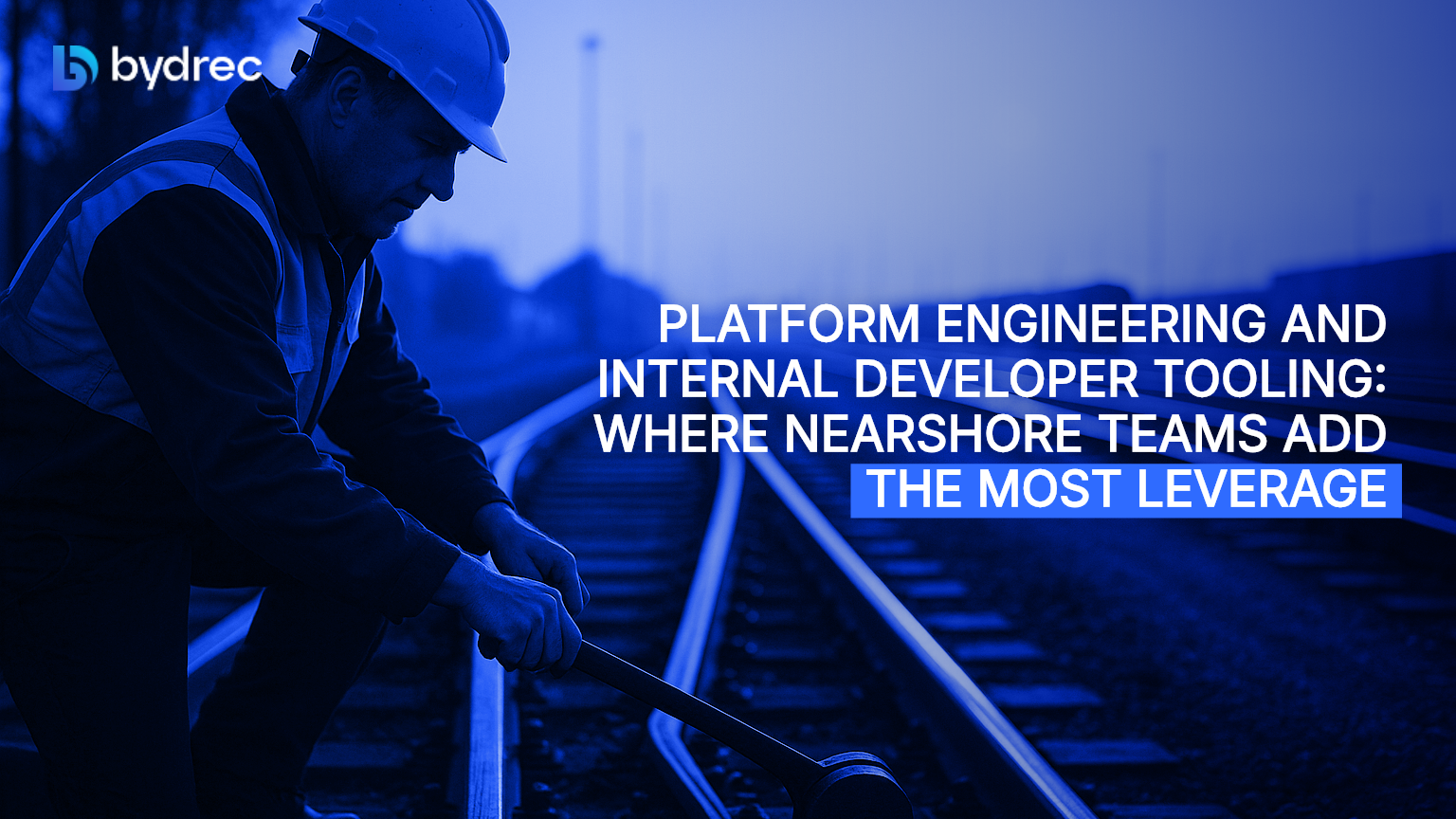
A year ago, platform engineering was a niche discipline discussed mostly in Slack channels and conference talks. Today, Gartner predicts that 80% of large software engineering organizations will have platform engineering teams by 2026, up from 45% in 2022. That's not a trend — it's a structural shift in how engineering leaders think about developer productivity.
The reason is simple math. As organizations adopt microservices, multi-cloud infrastructure, and AI/ML pipelines, the cognitive load on individual developers has exploded. Platform engineering exists to absorb that complexity into a well-designed internal developer platform (IDP), so product teams can ship without becoming infrastructure experts.
Here's what's less obvious: platform engineering is also one of the highest-leverage places to deploy a nearshore team. Not because it's cheaper labor for commodity work, but because it's specialized, high-context engineering that benefits enormously from real-time collaboration, shared working hours, and long-term team continuity — three things nearshore delivers that offshore struggles to match.
This post breaks down what platform engineering actually involves, why it's a natural fit for nearshore delivery models, and how to structure a team that builds internal tooling your developers will actually want to use.
What Platform Engineering Actually Solves
Platform engineering isn't DevOps rebranded. DevOps is a set of practices; platform engineering is a discipline that builds products — internal ones — for your engineering org.
A mature internal developer platform typically includes:
- Self-service infrastructure provisioning (Terraform modules, Crossplane, or custom Backstage plugins)
- Standardized CI/CD pipelines that developers can adopt without reinventing YAML from scratch
- Golden paths — pre-approved, opinionated ways to deploy common architectures (API service, event consumer, batch job)
- Observability baked in by default, not bolted on after an incident
- Environment management that eliminates "works on my machine" and staging drift
The payoff is measurable. Companies with mature platform engineering practices report 30-50% reductions in lead time for changes, according to the DevOps Research and Assessment (DORA) data referenced in the 2023 State of DevOps report. That's not abstract productivity — it's fewer sprints burned on environment setup and pipeline debugging.
The catch: building an IDP requires engineers who understand both infrastructure and developer experience — a rare combination that's expensive to hire and even harder to retain in-house.
Why This Work Is a Strong Fit for Nearshore Teams
Platform engineering has a specific profile that makes it well-suited to nearshore delivery, and it's worth being precise about why.
It requires sustained context, not task-based execution. Unlike a discrete feature build, internal tooling evolves continuously based on developer feedback loops. That means the engineers building it need to sit in the same standups, attend the same architecture reviews, and build relationships with the platform's internal customers — your product teams. A four- to six-hour timezone gap, common with offshore models, quietly erodes this feedback loop. Nearshore teams working in overlapping U.S. business hours don't have that problem.
It's a retention-sensitive discipline. Platform teams accumulate deep institutional knowledge about your infrastructure decisions, technical debt, and internal conventions. High turnover — a chronic issue in some offshore markets — is disproportionately costly here, because every departure resets tribal knowledge. LATAM nearshore markets report significantly lower attrition on long-term engagements compared to project-based offshore staffing, largely because engineers are integrated as embedded team members rather than rotating contractors.
It benefits from senior-level engineering, not headcount. You don't scale an IDP by adding junior engineers to a queue of tickets. You need two or three senior platform engineers who can make architectural tradeoffs independently. Nearshore markets across Latin America have a deep bench of senior cloud and DevOps talent, often with direct Azure, AWS, or Kubernetes certifications, without the six-figure compensation premiums common in U.S. metro markets.
Structuring a Nearshore Platform Team That Works
Getting platform engineering right with a distributed or nearshore team is less about tooling and more about team design. A few patterns we've seen work consistently:
Anchor the Platform Team to a Product Mindset
Treat your internal developer platform as a product with an owner, a roadmap, and user feedback — where the "users" are your internal engineers. A nearshore platform lead who owns this roadmap end-to-end, rather than executing isolated tickets from a backlog, produces far better outcomes than a purely staff-augmented model.
Pair Nearshore Engineers with Internal Champions
The fastest-failing IDP initiatives are the ones built in isolation from the developers who'll use them. Pair your nearshore platform engineers with 2-3 internal "champions" from product teams who test golden paths early and surface friction before company-wide rollout.
Standardize on Observable, Documented Golden Paths
Every self-service capability your platform team ships should come with a documented golden path and instrumented usage metrics. This isn't bureaucracy — it's how you know if adoption is actually happening, and it gives nearshore engineers clear success criteria independent of constant oversight.
Start with One High-Friction Workflow
Don't attempt to build a full IDP on day one. Identify the single workflow generating the most support tickets or Slack complaints — usually environment provisioning or CI/CD configuration — and solve that first. Momentum and internal trust compound from there.
Azure-Specific Considerations for Platform Teams
For organizations standardized on Azure, platform engineering has particular nuances worth planning around. Azure DevOps, Azure Kubernetes Service (AKS), and Azure Container Apps each have different maturity levels for self-service developer experiences compared to their AWS equivalents.
Teams building IDPs on Azure often find success layering Backstage (or a lighter internal portal) on top of Azure Resource Manager templates and Bicep, giving developers a consistent interface regardless of the underlying Azure service complexity. Azure Policy and Azure Blueprints can enforce governance guardrails without requiring every developer to understand compliance requirements directly — a critical pattern for regulated industries like fintech and healthcare.
Nearshore engineers with dedicated Azure architecture experience can implement these guardrails faster than generalist cloud engineers learning Azure-specific patterns on the job, which matters when governance requirements are non-negotiable from day one.
Measuring Whether Your Platform Investment Is Working
Platform engineering initiatives fail quietly when nobody's measuring adoption. Track these four metrics from month one:
- Self-service adoption rate — percentage of new services deployed via golden paths vs. custom pipelines
- Time to first deploy — how long a new engineer takes to ship their first change
- Platform team ticket volume — should trend downward as self-service capability matures
- Developer satisfaction (internal NPS) — a simple quarterly survey often reveals adoption blockers metrics alone won't show
If these numbers aren't moving after two quarters, the issue is usually team design or scope — not the underlying technology choices.
Where to Start
Platform engineering isn't a project with an end date — it's a capability you build once and compound over years. Getting the team composition right at the start, whether nearshore, in-house, or hybrid, determines whether that capability actually pays off or quietly stalls.
If you're evaluating how a nearshore team could support your platform engineering roadmap, our CTO vetting framework walks through the specific questions to ask before engaging any nearshore partner. You can also explore how our marketplace connects U.S. companies with vetted LATAM engineering talent, including senior platform and cloud engineers ready for long-term embedded roles.
Want to talk through your specific platform engineering challenges? Contact our team — we'll tell you honestly whether nearshore is the right fit before we talk about anything else.